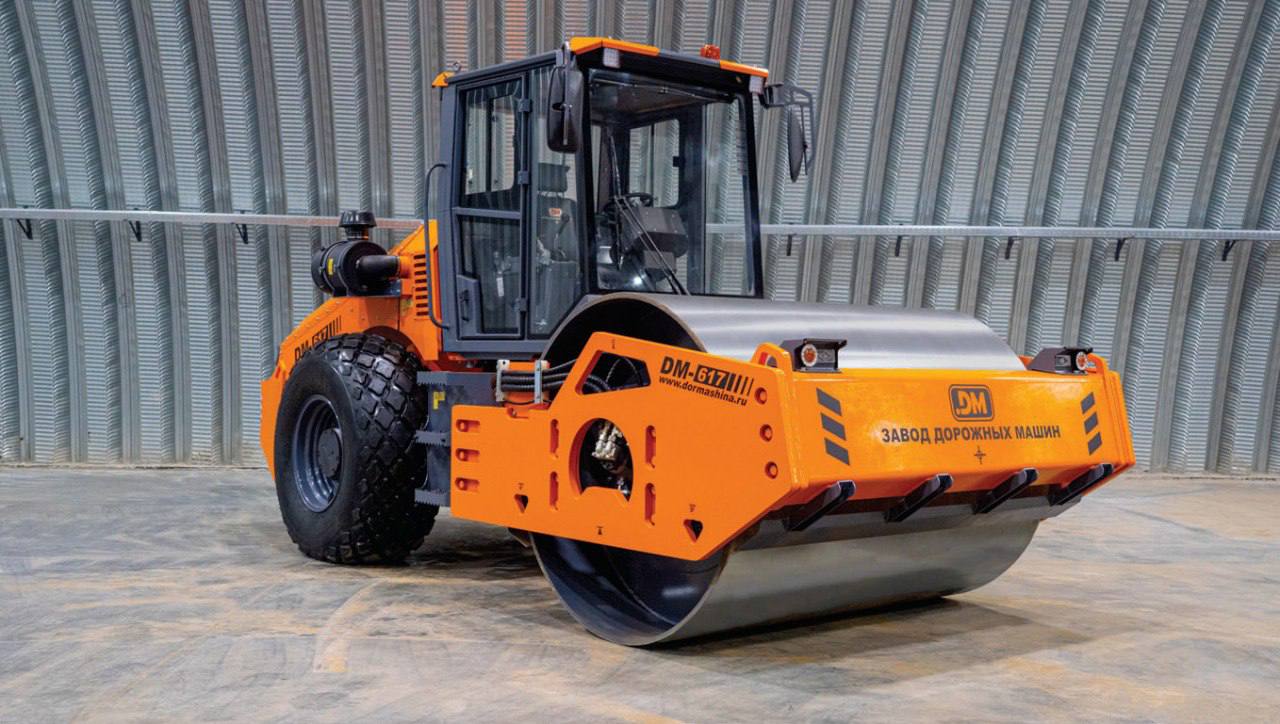
The latest issue of CTT Digest features a roundtable discussion with key players in the compaction equipment market — XCMG, SANY, Shantui, LGCE, BULL, LiuGong, KAYTEC, RASKAT and others.
Here are the key takeaways.
📊 Chinese Manufacturers Now Dominate
In 2020, Chinese-made rollers accounted for 42% of the Russian market.
By 2024–2025, that share has reached 97–99%.
Following peak import volumes in 2022, the market became oversaturated. Imports declined significantly in 2023–2024 as inventories accumulated.
Meanwhile, domestic production of self-propelled compaction equipment in Russia had fallen by 69% by September 2025.
The market has been fundamentally reshaped — and now operates almost entirely within a Chinese supply paradigm.
📉 No Shortage — In Fact, an Oversupply
Virtually all participants agreed: there is no shortage of rollers in today’s market.
On the contrary, several suppliers still hold unsold 2023 inventory in stock.
The main challenge is no longer availability — it is selecting the right machine for specific project requirements.
🧠 Intelligence Matters More Than Weight
The most significant trend is the adoption of compaction monitoring and documentation systems:
- Density meters
- Asphalt temperature sensors
- Pass mapping systems
- GPS integration
- Digital quality control platforms
The industry is shifting from intuitive, experience-based operation to precise, data-driven compaction processes.
This is particularly relevant for high-speed rail (HSR) projects, where compaction coefficients of 0.98–1.0 are required. Manufacturers confirm that such targets are achievable — provided proper technology and digital control systems are used.
❄️ Arctic Configurations Are Becoming Standard

- Pre-start heating systems
- Arctic-grade fluids
- Insulated cabs and hydraulic systems
- Operation capability down to –45°C
Some manufacturers offer factory-built Arctic versions, while others provide flexible customization tailored to customer requirements.
⚡ Electric and Autonomous Rollers Are Already Here
Several companies confirmed:
- Serial production of electric rollers is underway (primarily for China and Europe).
- Autonomous rollers are being deployed on real-world projects.
One example includes coordinated operation of up to 15 unmanned machines with positioning accuracy within 3 cm, supported by AI systems and 5G connectivity.
Russia is still at an early stage in this segment, but development efforts are ongoing.
👤 The Buyer Profile Has Changed
Where price once dominated purchasing decisions, today’s priorities include:
- Total cost of ownership (TCO)
- Service and spare parts availability
- Delivery speed
- Equipment liquidity / resale value
- Operator comfort and safety
- Financing terms
Buyers have become more pragmatic and systematic in their approach.
🛠 Service Is the Key Competitive Argument
Nearly every brand emphasized:
- Expanded dealer networks
- Regional spare parts warehouses
- Mobile service teams
- Operator training programs
- Extended warranty packages
In a highly competitive environment, companies are no longer selling machines alone — they are offering comprehensive lifecycle solutions.
🔎 The Bottom Line
The Russian road roller market has passed through its shock-and-restructuring phase.
Today it is defined by:
- Chinese dominance
- Oversupply
- Higher quality expectations
- Process digitalization
- A gradual shift toward autonomy
Compaction is becoming intelligent — and that is the defining vector for the coming years.